
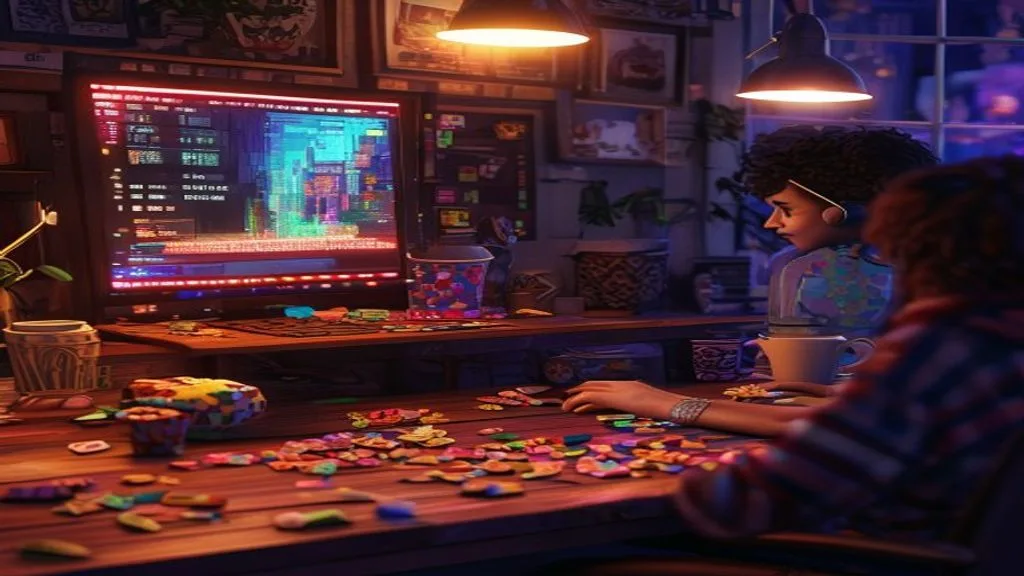
So here’s the thing. I have a backlog of like 40+ games on Steam. Big titles, AAA stuff, things I bought during sales with the full intention of playing “this weekend.” And yet — what do I actually boot up every single night? The same handful of indie games I’ve already sunk hundreds of hours into.
It’s a problem. Or maybe it’s not. Maybe I’ve just found the good stuff.
This whole rabbit hole started because I was genuinely bored. Not bored of gaming, but bored of finishing a game once and never touching it again. I wanted something that felt different every time I played it, something where run number 47 still had surprises. So I went hunting, tried a bunch of things, and now I’m here to tell you which ones actually delivered.
The Ones That Ruined My Sleep Schedule
Hades. Yeah, I know, everyone says Hades. But they say it because it’s true. Supergiant Games made a roguelike where dying is literally the point — every death sends you back to the House of Hades, and every run feels meaningfully different because of the boon combinations, weapon aspects, and (this is the part that hooked me) the story that unfolds between runs. I’ve done over 200 runs. The dialogue is still fresh. How do they do that?
Slay the Spire is the other obvious one, and I’m not going to pretend I’m too cool to mention it. Deckbuilding plus roguelike plus “just one more run” energy equals me looking at the clock and realizing it’s 3 AM on a Tuesday. According to Steam’s store page data, the game has maintained an “Overwhelmingly Positive” rating across over 100,000 reviews — which honestly tracks, because the community around this game is obsessive in the best way.
But here’s the one that surprised me most: Noita. A physics-based roguelike where every single pixel is simulated. Pour water on lava, it turns to steam. Set a forest on fire, it actually burns. I die constantly and usually in the stupidest ways possible (I once killed myself with my own exploding wand three seconds into a run), but I keep coming back because no two runs play out the same way. The emergent chaos is just — chef’s kiss.
The Ones I Didn’t Expect To Love
Into the Breach scratches a completely different itch. It’s a tactics game from the FTL folks, and each run takes maybe 2-3 hours. Short enough to fit into an evening, deep enough to make you agonize over every single move. I personally prefer this over most other tactics games because the information is perfect — you always know what the enemy will do next turn. No RNG surprises. Just pure “can you solve this puzzle with the tools you have” energy. That transparency makes every failure feel earned, and every victory feel brilliant.
Dead Cells deserves a mention too. Fast, tight, punishing. The movement in this game is so smooth that going back to other action games feels sluggish. It’s been updated so many times since launch that it’s practically a different game now (in a good way).
And look — if any of these games make you think “I want to build something like this,” I get it. That impulse is real. I actually wrote about how to start an indie game studio without losing your mind or your savings a while back, because I had that exact same thought after playing too much Hades at 2 AM.
A Quick Shoutout to the Weird Ones
Balatro. It’s poker-based deckbuilding. Sounds weird. Is weird. Is also incredibly addictive. The joker combinations create these absurd scoring engines where you’re multiplying millions of points and cackling to yourself. My honest confession: I bought Balatro thinking I’d play it for an hour and move on, and then I looked up and an entire weekend had vanished. Gone. No regrets though.
Vampire Survivors costs like three dollars and has given me more entertainment than games I paid sixty for. You just walk around, auto-attack, pick upgrades, and try to survive waves of monsters. It sounds braindead. It kind of is. But the “one more run” loop is devastating.
What Makes These Games So Replayable, Anyway?
I’ve thought about this a lot (probably too much), and it comes down to a few things:
- Procedural generation that matters — not just random layouts, but randomness that changes how you play
- Short run times — so starting over doesn’t feel like a punishment
- Meaningful progression between runs — unlocking new stuff that opens up new strategies
- Depth hiding under simplicity — easy to learn, impossible to master
The best indie studios seem to understand this instinctively. Building that kind of replayability into a game is genuinely hard design work — something I’ve been exploring myself. We recently started documenting our own development process in our Devlog #1 about building the Neon Drift Engine, and let me tell you, even thinking about replay loops from the developer side gives you a whole new appreciation for games that nail it.
What’s cool about the indie scene right now is that a lot of these games are made by tiny teams — sometimes just one or two people working remotely. If that lifestyle interests you at all, there’s a solid guide on game development remote jobs that covers the practical side of actually making it work.
So What Should You Play First?
If you’ve never dipped into this world: start with Hades. It’s the most accessible, the most polished, and it has a story that genuinely makes you care. If you want something you can play in tiny bursts, Slay the Spire or Balatro. If you want chaos, Noita. If you want to feel smart, Into the Breach.
Or just try all of them. Most are under twenty bucks. Your backlog can wait.
(Mine certainly is.)
Pertanyaan yang Sering Diajukan (FAQ)
Are these indie games good for people who don't have much time to play?
Absolutely — that's actually one of the best things about roguelikes and run-based games. Most runs take anywhere from 20 minutes to an hour, so you can squeeze in a session without committing your whole evening.
Do I need a powerful PC to run these indie games?
Nope, almost all of them run on pretty modest hardware. Games like Vampire Survivors and Slay the Spire could probably run on a toaster. Noita is the most demanding of the bunch, but even that doesn't need anything fancy.
What's the difference between high replayability and just being a long game?
A long game gives you more content to get through once. A highly replayable game gives you reasons to start over — different builds, random elements, new strategies each time. It's the difference between a 60-hour story and a 20-minute run you want to do 200 times.